How to play
Foul Play uses the target’s Attack stat. Wish heals on the following turn; Protect can help Umbreon receive that recovery, while Snarl lowers opposing Special Attack when it hits.
Choose six Pokémon. See your score. Find your next teammate.
High friendship + level up at night; avoid meeting Sylveon’s conditionsTo Umbreon
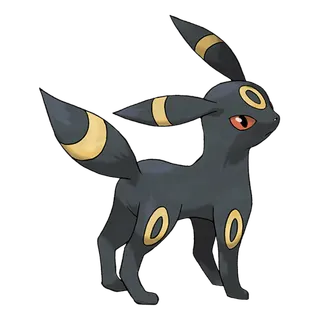
UmbreonLast stage shown
#0197 · GENERATION 2
Defensive support with recovery
Build a Umbreon team ↓Hover or tap the cards.
Custom Pokédex collection.
Generation 9 · casual singles · base form
Foul Play uses the target’s Attack stat. Wish heals on the following turn; Protect can help Umbreon receive that recovery, while Snarl lowers opposing Special Attack when it hits.
Key risk. Fighting, Bug and Fairy attacks are super effective. Passive turns can give opponents opportunities to set up, and Wish recovery takes time.
This editorial starting point is not a ranked-format recommendation or a legality check. It does not specify EVs or Tera type. Moves, items and abilities here do not change the builder score.
BATTLE PLAN
Foul Play uses the target’s Attack stat. Wish heals on the following turn; Protect can help Umbreon receive that recovery, while Snarl lowers opposing Special Attack when it hits.
Consider Protect on the following turn, but watch for the opponent using that passive turn to set up. Delayed healing is not immediate protection.
Snarl lowers Special Attack when it hits. Compare that benefit with recovering or switching; Umbreon still needs help against Fighting, Bug and Fairy attacks.
A teammate uses a switching move to bring Umbreon in. A slower pivot may take the opponent’s hit first. Turn order and the opponent’s move still matter.
ITEM & ABILITY
Foul Play uses the target’s Attack stat. Wish heals on the following turn, so Umbreon needs a plan for the turn between using Wish and receiving recovery.
Watch the tradeoff. Fighting, Bug and Fairy attacks are super effective. Passive turns can give opponents opportunities to set up, and Wish recovery takes time.
These battle mechanics do not change the builder’s type-and-base-stat score. The tool does not simulate moves, abilities, held items or damage.
COMPARE YOUR OPTIONS
Clefable provides Fairy typing and a special setup option, with different weaknesses.
| Stat | Umbreon | Clefable |
|---|---|---|
| HP | 95 | 95 |
| Attack | 65 | 70 |
| Defense | 110 | 73 |
| Sp. Attack | 60 | 95 |
| Sp. Defense | 130 | 90 |
| Speed | 65 | 60 |
Base stats are not final battle stats. Level, nature, IVs, EVs and battle effects affect the result. Check availability in your game before choosing an alternative.
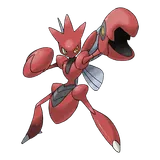
A Fairy teammate can resist Fighting and Bug attacks. A Steel teammate helps cover Fairy attacks.
Resists Fighting and Bug attacks.
Resists Fairy and Bug; takes neutral Fighting damage.
These are typing-based starting pairs, not a complete competitive team. Check the remaining four slots and your game’s rules.
Compare computed teammate suggestions →Clefable provides Fairy typing and a special setup option, with different weaknesses.
Try Clefable →Typing only. Abilities, items and battle effects can change these matchups.
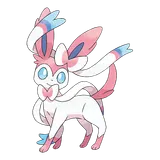
High friendship + level up at night; avoid meeting Sylveon’s conditions
Umbreon#197Standard main-series evolution conditions. Regional forms and games with special evolution systems can differ.
Start with Umbreon. Add teammates and compare your type-and-base-stat score.
Base species #001–1025, using Generation 9 data. A casual planning pool, not a VGC, ranked, or Showdown National Dex legality validator. Regional, Mega and alternate forms are not included yet.
Types & base stats only · Not a win probability.
Keep up to 20 teams in this browser. Clearing browser data removes saved teams.
No saved teams yet.
FIND A BETTER FIT
Fill your empty slots first. Each candidate is scored using the same rules as your current team. Only positive score changes are shown.
Team score 40 → 70
Team score 40 → 70
Team score 40 → 69
Team score 40 → 69
Team score 40 → 69
Team score 40 → 68
Suggestions optimize this initial planning heuristic. Your preferences and actual battle strategy may favor another Pokémon.
Incoming damage assumes typing only. 0× = immune, ½× / ¼× = resistant, 2× / 4× = weak. Resistance counts include immunities.
| Attack | Umbreon | Weak | Resist |
|---|---|---|---|
| Normal | 1× | 0 | 0 |
| Fire | 1× | 0 | 0 |
| Water | 1× | 0 | 0 |
| Electric | 1× | 0 | 0 |
| Grass | 1× | 0 | 0 |
| Ice | 1× | 0 | 0 |
| Fighting | 2× | 1 | 0 |
| Poison | 1× | 0 | 0 |
| Ground | 1× | 0 | 0 |
| Flying | 1× | 0 | 0 |
| Psychic | 0× | 0 | 1 |
| Bug | 2× | 1 | 0 |
| Rock | 1× | 0 | 0 |
| Ghost | ½× | 0 | 1 |
| Dragon | 1× | 0 | 0 |
| Dark | ½× | 0 | 1 |
| Steel | 1× | 0 | 0 |
| Fairy | 2× | 1 | 0 |
Against single-type targets, using only same-type attacks. This is not coverage against every dual-type species.
Offense (25%): neutral-or-better type coverage and strongest attacking base stats. Defense (30%): team resistances, unprotected and repeated weaknesses, and 4× vulnerabilities. Coverage (25%): fraction of 18 single-type targets hit super effectively by your own types. Synergy (20%): teammates resisting each other’s weaknesses, physical/special/bulk stat signals and base Speed ≥100. Scores are rounded to 0–100; the total uses the displayed subscores.
Rating bands: Excellent ≥80, Good ≥65, Fair ≥45, Poor below 45. An empty team has no rating.
Small teams are provisional and are not given a separate completion bonus. Adding a Pokémon can lower the score if it creates new weaknesses or lowers averages. These initial heuristics have not been calibrated against battle outcomes.
Data: Pokémon Showdown / @pkmn/dex · Sprites: PokéAPI contributors · Base species only
Starter advice written for this guide; mechanics checked against Pokémon Showdown’s Generation 9 data.
Starter moveset reviewed October 6, 2026; battle notes added October 16, 2026. Suggest a correction.